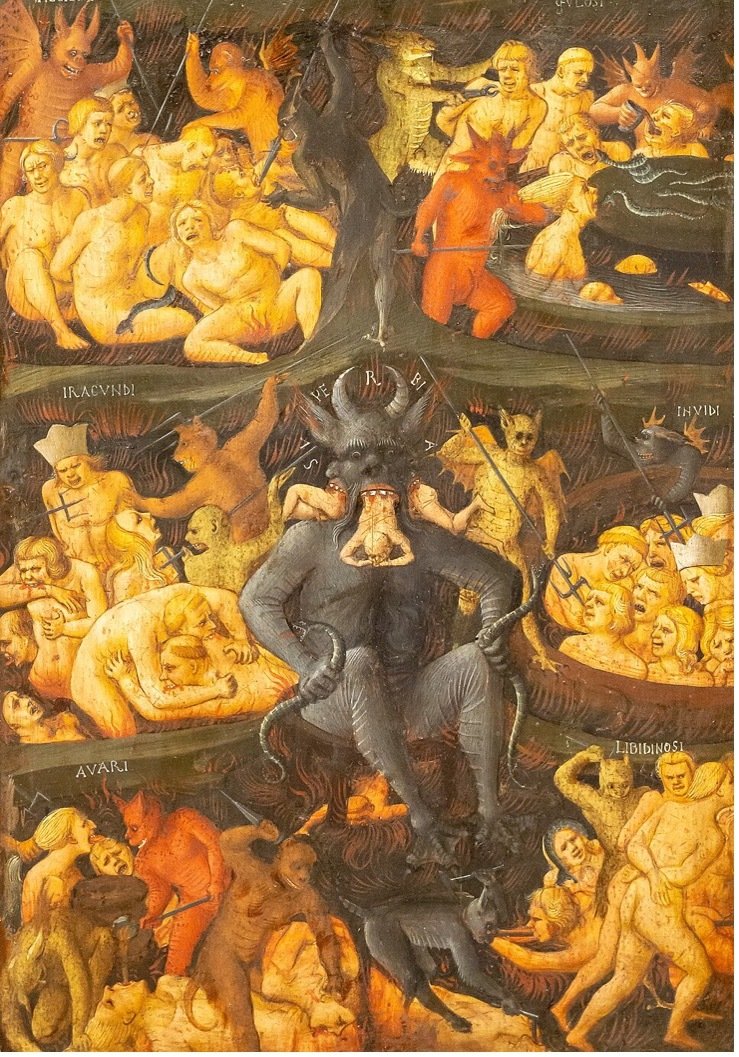
Oooh, we do like a bit of hellfire and damnation, visited on those who we think deserve it! Those who hurt or threaten us. After all, surely God is on our side?
But writing to the early church communities in Rome, Paul exhorted them NOT to judge one another. “Who are you to pass judgement?” he asked them.
But that is not all. Not only are we not to judge, but we are to forgive! Not seven times, that number of holiness and perfection, but seventy-seven times … absolute forgiveness (Matthew 18:22).
And then to top it off, Jesus tells a story about how much is forgiven of the ungrateful slave who then goes on to demand payment of a much smaller amount from someone else … we are left feeling rather deflated, like naughty schoolchildren being lectured for being ungrateful.
So much for God being on our side.
And yet …
Both of our readings this Sunday are about creating a world more like the Kingdom of God, with happier individuals to live in it. The offense which we suffer, and which makes us long for retribution to be visited on those who hurt us, actually damages us twice – once when we are hurt, and then continuously when, reeling from that hurt or offence, we in turn hurt, (mis-)judge or offend others.
The forgiveness Jesus requires isn’t about erasing or undoing the offence (the first damage), it is about stopping it from continuing to damage us – and allowing it to cause us to hurt others. Nadia Bolz-Weber talks of forgiveness as a bolt-cutter, breaking the chain of hurt and offence. Nelson Mandela spoke of resentment being like drinking poison – and hoping it would hurt the one who hurt us.
Turns out that not judging others is for our benefit, forgiveness of others is for our good.
So yet again we see God’s gracious action for us … God on our side … just not in the way we might have first imagined it or even wished for it. Surprise surprise.
Chris Potter