Dear La Côte family and friends,
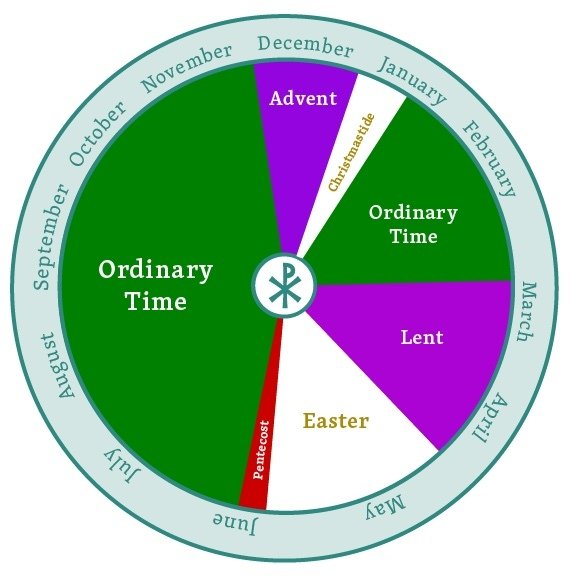
The Church of England’s calendar is divided into liturgical seasons, grouped round important Christian festivals. The calendar is an annual cycle of Christian memory-making that allows us to remember Jesus’ life, death and resurrection; to celebrate the gift of the Holy Spirit; and to recall the ministry of the holy people who have spread the Christian faith over the centuries. Through this structuring of our Christian memory, we bring the past into our present.
The Church’s liturgical year is divided into several seasons. It begins with Advent, which looks forward to Christmas. The visit of the wise men to Jesus is remembered at Epiphany, after which there is a period of ‘Ordinary Time’. The six weeks of Lent prepare us for Easter, which celebrates Jesus’ resurrection, leading forward to his Ascension and the gift of the Holy Spirit to the Church at Pentecost. ‘Ordinary Time’ then resumes until the end of the church year.
But Ordinary Time is not “ordinary” in the sense of being boring or unimportant. Rather, it is the season during which the Church reflects on the continual ministry of Jesus and what it means to follow him in everyday life.
After the great celebrations of Christmas, Epiphany, Easter and Pentecost, Ordinary Time invites us to grow steadily in faith. It reminds us that most of our Christian journey is lived not in extraordinary moments but in the routines of work, family, friendship, worship and service. It is in these ordinary moments that God continues to shape us into the likeness of Christ.
The green clergy stoles worn during this season symbolizes growth and life. As plants grow slowly and steadfastly, so too are we called to deepen our relationship with God through prayer, Scripture, worship, and acts of love.
Betty Talbot