Dear La Côte family and friends,
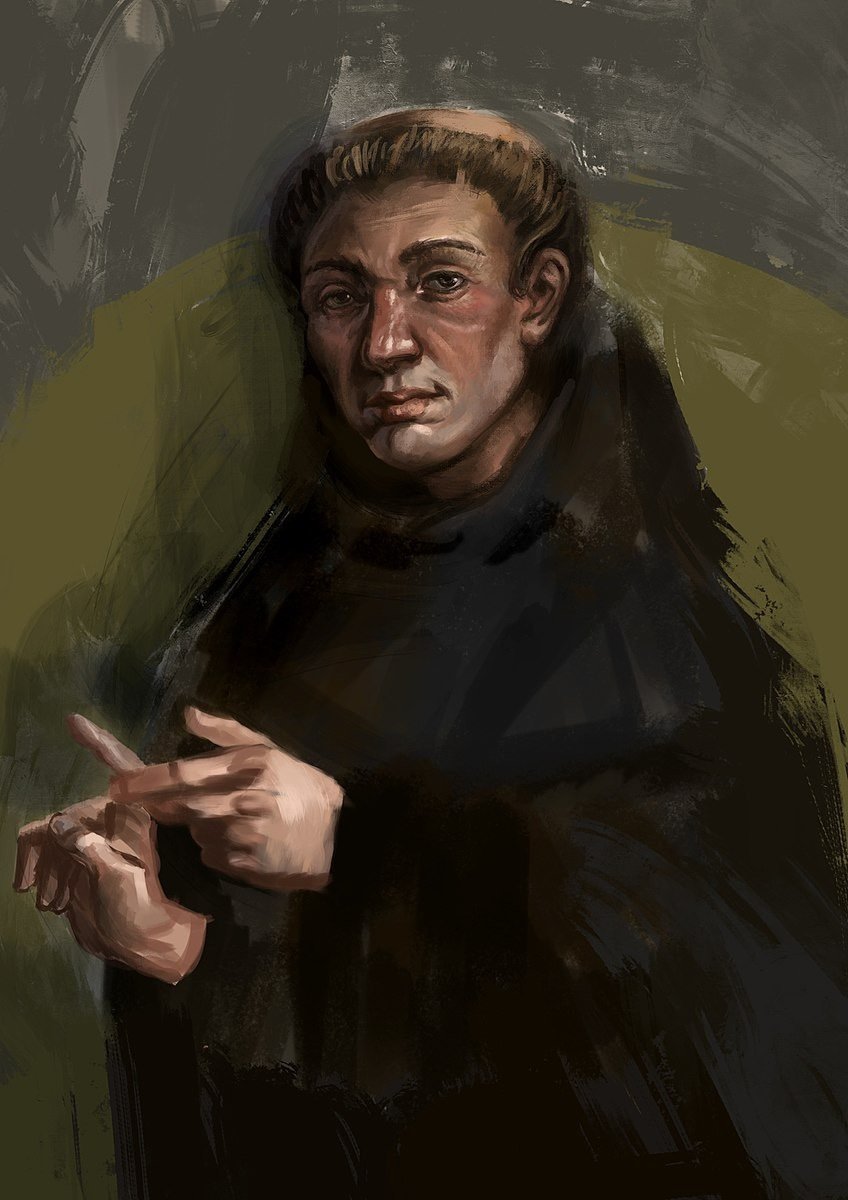
William of Ockham was a 14th Century friar, philosopher and theologian. He is widely known for Occam’s razor, the principle that the simplest explanation, requiring the fewest assumptions, is usually the correct one. It is often summarized as "entities should not be multiplied unnecessarily." A kind of scholarly and ancient version of KISS (keep it simple, stupid).
The Trinity does not, on the face of it, feel simple. God, who is One, is multiplied it seems into Three, or One but also Three, or Three in One … or something. Is that a necessary or unnecessary complexity, according to Ockham’s principle?
The doctrine of the Trinity is - like much of our philosophising and theologising - an attempt to explain something which is beyond our comprehension. The Trinity is best understood not as a complicated conceptual formula but as a working model. The thing to do, in order to learn to love it, is to test if and how the model resonates with our lived experience. That is probably how we decide on the ‘truth’ of a lot of what we believe in: not in terms of pure conceptual logic, but does it align with what we observe, feel and live. Tested in that way, we can see that somehow the Trinity ‘works’.
One could start with the nature of, and our experience of, love. If God is ‘Love’ then a truly generous and overflowing love is experienced in the idea of a divine relational community, rather than the austere remoteness of a conceptual unitary´Force’ behind the universe.
Explaining the nature of God in terms of relational community is also a way to say that the ultimate nature of our universe is relational, and the ways of living in it and finding ways forward are also relational. That resonates with our lived reality.
Through a trinitarian emphasis on relational community, we have a pattern for addressing the challenges of our world, including the affairs of nations, our response to others, the impersonal anonymity of technology, real Life. Beyond the philosophical concepts, there is a way to live the Trinity in our daily lives, with family, friends, communities … let us explore that.
Michael French