SWICE Newsletter

February 2026

 
Dear SWICE community,
 
In today's newsletter, we discover useful tools for co-creation, explore the Suurstoffi neighbourhood and its Living Lab, and start looking forward to the SWICE + Lantern conference.
 
Have a great day!
The SWICE Management Team

Tools for co-creation


Our latest SWICE x Lantern webinar on tools for co-creation is now online!

Living Labs are ideal settings to co-create solutions for complex challenges relating to the energy transition, especially with regards to the built environment. However, effective co-creation requires well-designed tools to structure dialogue, share knowledge, and turn diverse perspectives into actionable insights.

Our researchers presented the following tools that are currently being used in our Living Labs to advance the energy transition:

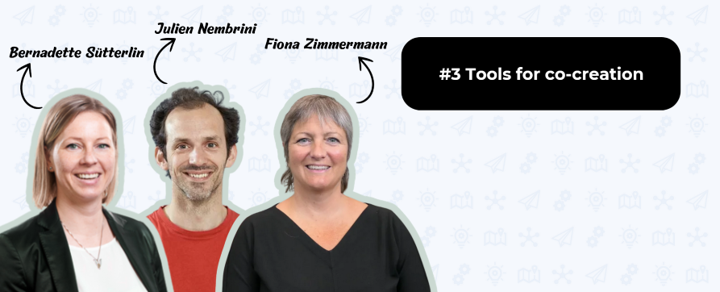
📊 Julien Nembrini introduced us to the SWICE App, which allows researchers to easily run ethics-approved, anonymity-preserving experiments on sustainability-related behaviour.

👥 Bernadette Suetterlin walked us through the LifeStyler tool, which categorises users into various sustainability-related lifestyles and provides green tips tailored to their profile.

💬 Fiona Zimmermann demonstrated her research live with a story, then showed us a storytelling toolbox that can have real impact in communication about the energy transition.

👉 Rewatch webinar. Next webinar on Mobility to be announced soon!

Living and (co-)working in Suurstoffi
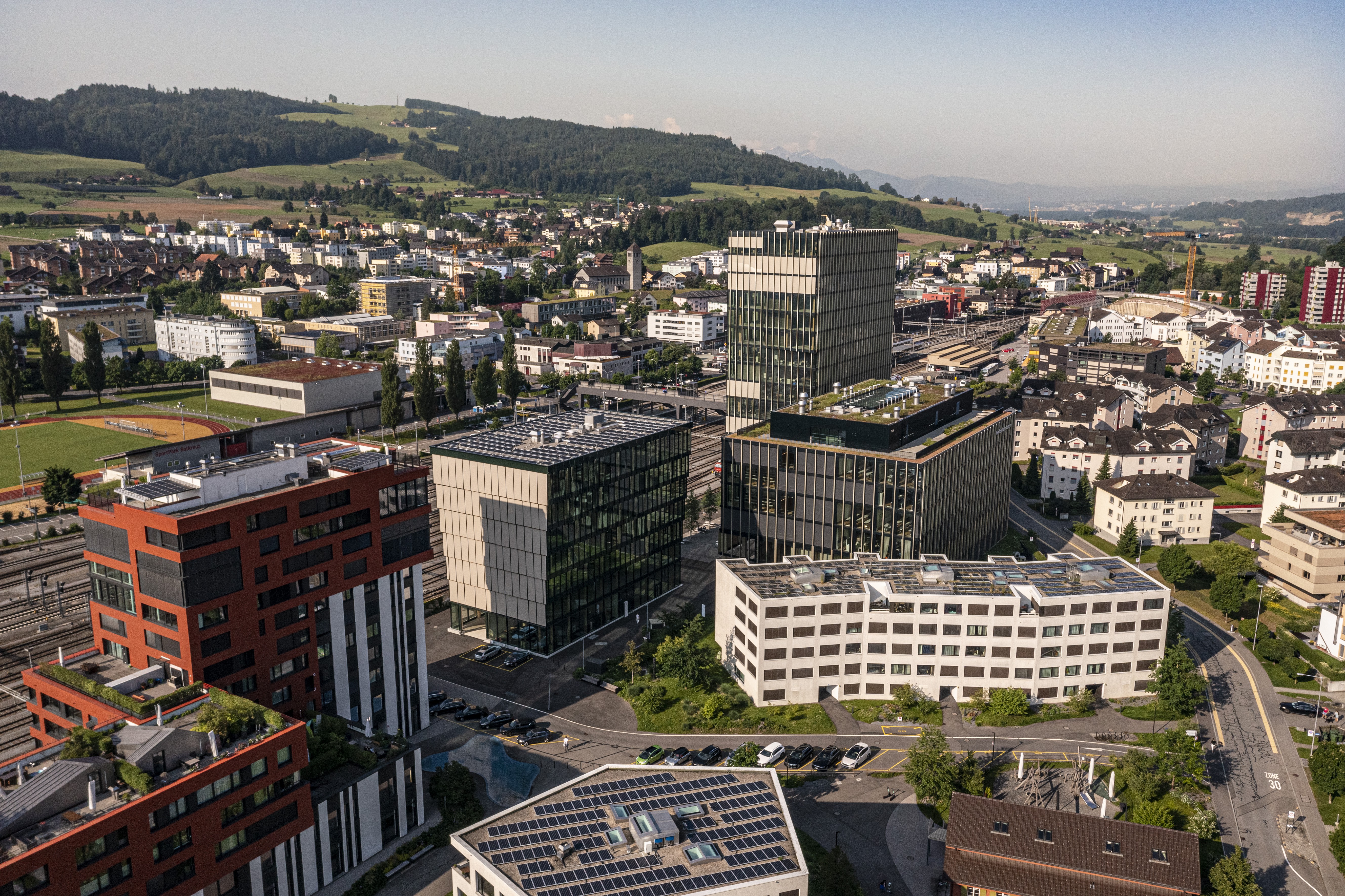
 

Suurstoffi is an urban neighborhood hosting around 1’500 residents, 2’000 students and 500 employees. The area is known for its innovative architecture, including Switzerland’s largest wooden building and a vertical garden tower.

At the same time, Suurstoffi functions as a Living Lab, where SWICE WP6 researchers and partner institutions investigate how mobility, teleworking and energy consumption interact in everyday life.

The team's research has resulted in the following key insights:

🖥️ Teleworking can reduce commuting emissions, but also increase energy use at home.

🏢 Neighborhood coworking spaces can help balance sustainability and wellbeing.

🥵 Environmental conditions, such as heat, shape mobility behavior.

By combining participatory processes with scientific evaluation, the Living Lab provides a example of how mobility, energy and urban development can be integrated in the transition towards more sustainable neighborhoods.


👉 Full article: https://sweet-swice.ch/spotlight-suurstoffi/ 

Picture: ZugEstates AG

Research corner


Work-life (im)balance: an assessment of housing and commuting energy use inequalities in Switzerland
Vivien Fisch-Romito and Julia Steinberger

This paper quantifies final energy use related to everyday housing and commuting activities for individuals representative of the Swiss population, and assesses how socio-economic, geographical, infrastructural, and behavioral determinants affect it. The authors find that energy use is more unequally distributed between individuals than income, with the top 20% energy users being responsible for 76% and 53% of the total energy use for commuting and housing respectively. Their results call for policies that target top users, include sufficiency levers, and go beyond cost-only approaches to be age and gender inclusive.


How (not) to incentivize sustainable mobility? Lessons from a swiss mobility competition
Silvio Sticher, Hannes Walliman and Noah Balthasar

This study investigates the impact of a gamified experiment designed to promote sustainable mobility among students and staff members of HSLU. Its results highlight the difficulty of achieving behavioral change in this field. In a two-month mobility competition, structured as a randomized controlled trial with a 3×3 factorial design, neither monetary incentives nor norm-based nudging significantly influenced mobility behavior. The (null) results suggest that there is no “gamified quick fix” for making mobility substantially more sustainable. 


+ Recent papers from CISBAT 2025:

Building legislation vs. performance in Switzerland: Navigating trade-offs between energy efficiency and indoor environmental quality
Hanieh Khodaei Tehrani, Jan Wienold, Kun Lyu, Dolaana Khovalyg, Dusan Licina and Marilyne Andersen

Indoor climate challenges and potential health consequences in buildings primarily targeting energy efficiency
Hanieh Khodaei Tehrani, Jan Wienold, Dusan Licina, Kun Lyu, Dolaana Khovalyg and Marilyne Andersen

Granularity level exploration: An analysis on correlations between presence and energy loads
Marion Schoenenweid, Moreno Colombo, Michaël Papinutto, Jean-Philippe Bacher and Julien Nembrini

Beyond efficiency: Exploring the socio-economic and demographic drivers of sufficiency in buildings
Til Sommer, Zuhaib Batra, Thomas Jusselme and Kristina Orehounig

Operationalizing Switzerland-wide democratic transformation to functional resilient 8-minute neighborhoods
Sascha Nick and Esha Sharma

Inferring Swiss residential occupancy patterns through smart meter analysis
Fatih Topak and Kristina Orehounig


+ Recent paper from the 18th Conference of IBPSA:

Sufficiency-first: Combining sufficiency measures with optimal retrofitting to reach net-zero residential buildings in Switzerland
Til Sommer et al.


👉 All SWICE publications are listed at sweet-swice.ch/publications 

SWICE + Lantern Conference 2026


Save the date!

Our yearly conference is coming up in June, and the SWICE Management Team has been working hard to organize another outstanding event.

In 2026, we have decided to strengthen our ties with our sister consortium SWEET Lantern further, by organizing a joint conference. This will be a great opportunity for cross-pollination and to build research bridges between our scientific communities.

📍 Fribourg/Freiburg
📅 10.06.26

As usual, you can expect to learn all about the leading research on wellbeing in the energy transition, a focus on participatory formats, and ample time to catch up with your colleagues.

This year, abstracts from presentations will be available in English, French and German, and participants will be allowed to ask questions in any language.

More information soon!

What's next? 


05-07.03.26 | Journées de la Durabilité at EPFL (with events featuring Luisa Pastore, Sascha Nick and Philippe Thalmann)

10.06.26 | SWICE Conference

16-17.06.26 | SSH Energy 2026

Hey! Thanks for reading all the way to here!

Any thoughts about this newsletter, or our communication in general? Send your feedback to joan.suris@epfl.ch.

Follow SWICE on LinkedIn to stay up to date with the latest news!

Linkedin

SWICE Newsletter

Subscribe to our mailing list and get the latest news about the SWICE project!

Subscribe